What are Rugs?
Rugs are a textile floor covering that can be used to add comfort, warmth, and style to a room. They come in a variety of sizes, shapes, colors, and patterns, making it easy to find a rug that compliments your existing decor.
The History of Rugs
Rugs have been used as floor coverings for thousands of years, dating back to ancient times. The earliest rugs were made from animal hides and were used to keep people warm in cold climates. Over time, the techniques and materials used to create rugs evolved, resulting in a variety of styles and patterns.
Why are Rugs Important?
Rugs can serve a variety of purposes in a home. They can add warmth and comfort to a space, protect flooring from wear and tear, and even absorb sound. Rugs can also be used to define different areas of a room, such as a seating area or dining area.
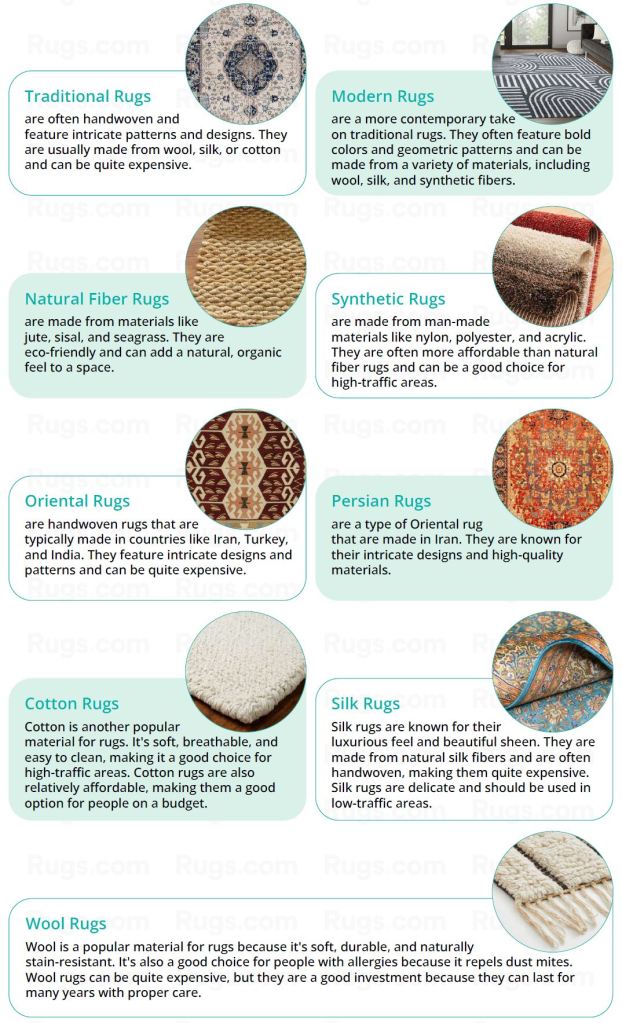
Traditional Rugs: Traditional rugs are often handwoven and feature intricate patterns and designs. They are usually made from wool, silk, or cotton and can be quite expensive.
Modern Rugs: Modern rugs are a more contemporary take on traditional rugs. They often feature bold colors and geometric patterns and can be made from a variety of materials, including wool, silk, and synthetic fibers.
Natural Fiber Rugs: Natural fiber rugs are made from materials like jute, sisal, and seagrass. They are eco-friendly and can add a natural, organic feel to a space.
Synthetic Rugs: Synthetic rugs are made from man-made materials like nylon, polyester, and acrylic. They are often more affordable than natural fiber rugs and can be a good choice for high-traffic areas.
Oriental Rugs: Oriental rugs are handwoven rugs that are typically made in countries like Iran, Turkey, and India. They feature intricate designs and patterns and can be quite expensive.
Persian Rugs: Persian rugs are a type of Oriental rug that are made in Iran. They are known for their intricate designs and high-quality materials.
What Are Rugs Made From?
Wool Rugs
Wool is a popular material for rugs because it’s soft, durable, and naturally stain-resistant. It’s also a good choice for people with allergies because it repels dust mites. Wool rugs can be quite expensive, but they are a good investment because they can last for many years with proper care.
Cotton Rugs
Cotton is another popular material for rugs. It’s soft, breathable, and easy to clean, making it a good choice for high-traffic areas. Cotton rugs are also relatively affordable, making them a good option for people on a budget.
Silk Rugs
Silk rugs are known for their luxurious feel and beautiful sheen. They are made from natural silk fibers and are often handwoven, making them quite expensive. Silk rugs are delicate and should be used in low-traffic areas.
Jute Rugs
Jute is an eco-friendly material that’s becoming increasingly popular for rugs. It’s a natural fiber that’s renewable and biodegradable, making it a sustainable choice. Jute rugs are durable and have a unique texture that can add interest to a room.
Sisal Rugs
Sisal is another natural fiber that’s often used in rugs. It’s a durable material that’s resistant to stains and can withstand heavy foot traffic. Sisal rugs are often a good choice for high-traffic areas like entryways and hallways.
Polypropylene Rugs
Polypropylene is a man-made material that’s often used in rugs. It’s durable and stain-resistant, making it a good choice for homes with kids and pets. Polypropylene rugs are also relatively affordable, making them a good option for people on a budget.
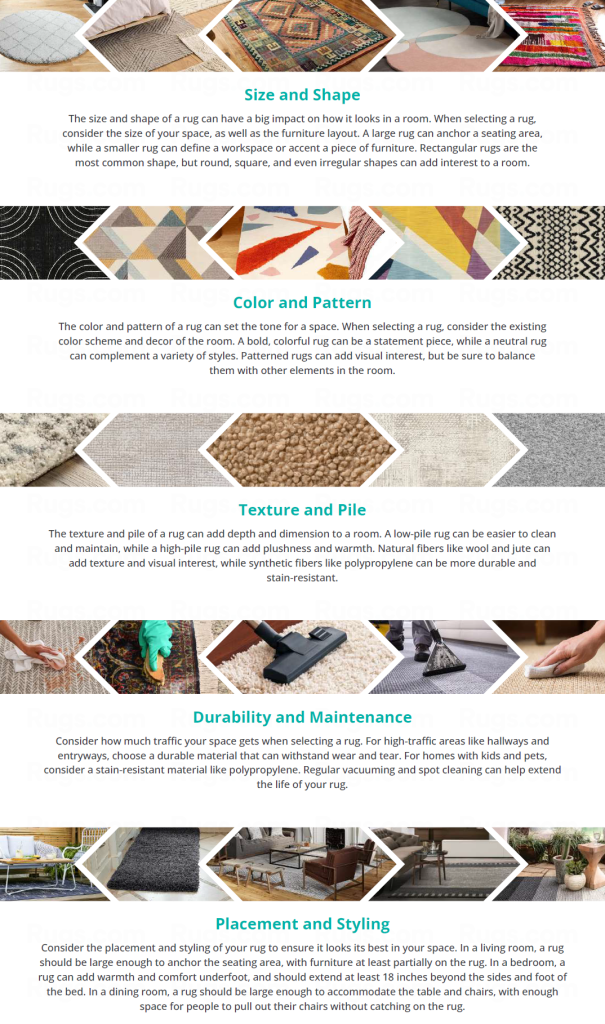
Size and Shape
The size and shape of a rug can have a big impact on how it looks in a room. When selecting a rug, consider the size of your space, as well as the furniture layout. A large rug can anchor a seating area, while a smaller rug can define a workspace or accent a piece of furniture. Rectangular rugs are the most common shape, but round, square, and even irregular shapes can add interest to a room.
Color and Pattern
The color and pattern of a rug can set the tone for a space. When selecting a rug, consider the existing color scheme and decor of the room. A bold, colorful rug can be a statement piece, while a neutral rug can compliment a variety of styles. Patterned rugs can add visual interest, but be sure to balance them with other elements in the room.
Texture and Pile
The texture and pile of a rug can add depth and dimension to a room. A low-pile rug can be easier to clean and maintain, while a high-pile rug can add plushness and warmth. Natural fibers like wool and jute can add texture and visual interest, while synthetic fibers like polypropylene can be more durable and stain-resistant.
Durability and Maintenance
Consider how much traffic your space gets when selecting a rug. For high-traffic areas like hallways and entryways, choose a durable material that can withstand wear and tear. For homes with kids and pets, consider a stain-resistant material like polypropylene. Regular vacuuming and spot cleaning can help extend the life of your rug.
Placement and Styling
Consider the placement and styling of your rug to ensure it looks its best in your space. In a living room, a rug should be large enough to anchor the seating area, with furniture at least partially on the rug. In a bedroom, a rug can add warmth and comfort underfoot, and should extend at least 18 inches beyond the sides and foot of the bed. In a dining room, a rug should be large enough to accommodate the table and chairs, with enough space for people to pull out their chairs without catching on the rug.
Living Room Rugs
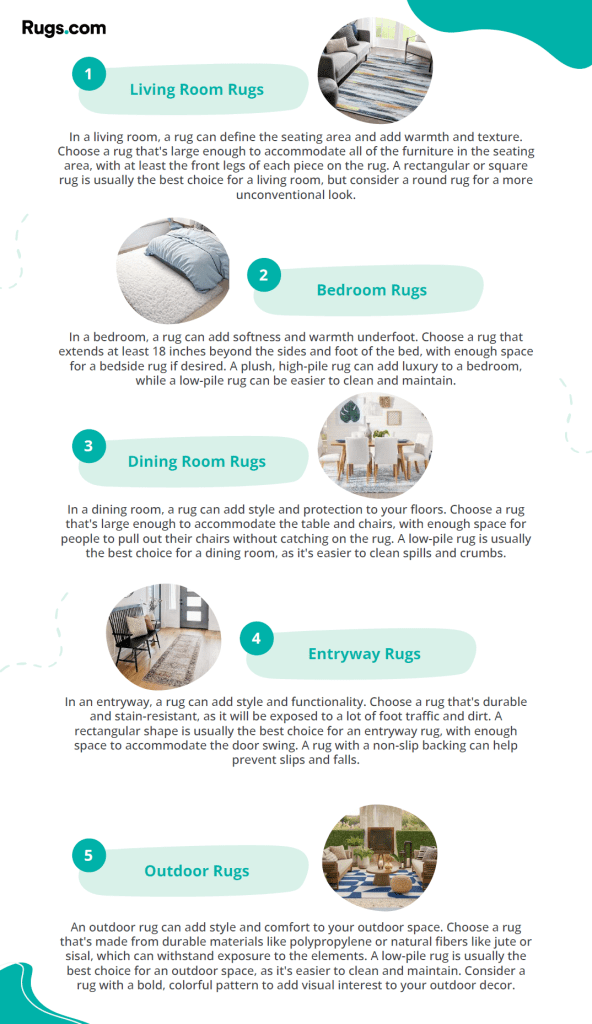
In a living room, a rug can define the seating area and add warmth and texture. Choose a rug that’s large enough to accommodate all of the furniture in the seating area, with at least the front legs of each piece on the rug. A rectangular or square rug is usually the best choice for a living room, but consider a round rug for a more unconventional look.
Bedroom Rugs
In a bedroom, a rug can add softness and warmth underfoot. Choose a rug that extends at least 18 inches beyond the sides and foot of the bed, with enough space for a bedside rug if desired. A plush, high-pile rug can add luxury to a bedroom, while a low-pile rug can be easier to clean and maintain.
Dining Room Rugs
In a dining room, a rug can add style and protection to your floors. Choose a rug that’s large enough to accommodate the table and chairs, with enough space for people to pull out their chairs without catching on the rug. A low-pile rug is usually the best choice for a dining room, as it’s easier to clean spills and crumbs.
Entryway Rugs
In an entryway, a rug can add style and functionality. Choose a rug that’s durable and stain-resistant, as it will be exposed to a lot of foot traffic and dirt. A rectangular shape is usually the best choice for an entryway rug, with enough space to accommodate the door swing. A rug with a non-slip backing can help prevent slips and falls.
Outdoor Rugs
An outdoor rug can add style and comfort to your outdoor space. Choose a rug that’s made from durable materials like polypropylene or natural fibers like jute or sisal, which can withstand exposure to the elements. A low-pile rug is usually the best choice for an outdoor space, as it’s easier to clean and maintain. Consider a rug with a bold, colorful pattern to add visual interest to your outdoor decor.
Vacuuming
Regular vacuuming is the best way to keep your rugs clean and free of dust and dirt. Vacuum your rugs at least once a week, or more often if you have pets or high foot traffic. Use a vacuum with a rotating brush or beater bar to help dislodge dirt and debris from the rug fibers. If your rug has fringes, use the vacuum’s upholstery attachment to avoid damaging them.
Spot Cleaning
Accidents happen, and when they do, it’s important to clean up spills and stains as quickly as possible to prevent them from setting in. Blot up spills with a clean, dry cloth or paper towel, and avoid rubbing the stain, as this can spread it further. Use a mild cleaning solution and a soft-bristled brush to gently work the stain out of the rug fibers. Always test any cleaning solution on an inconspicuous area of the rug first to ensure it won’t cause damage.
Professional Cleaning
Even with regular vacuuming and spot cleaning, your rugs may still need a deep clean from time to time. Professional rug cleaning services can help remove ground-in dirt and stains and restore your rug’s appearance. Look for a reputable rug cleaner who specializes in your type of rug and uses safe, eco-friendly cleaning methods.

Shedding
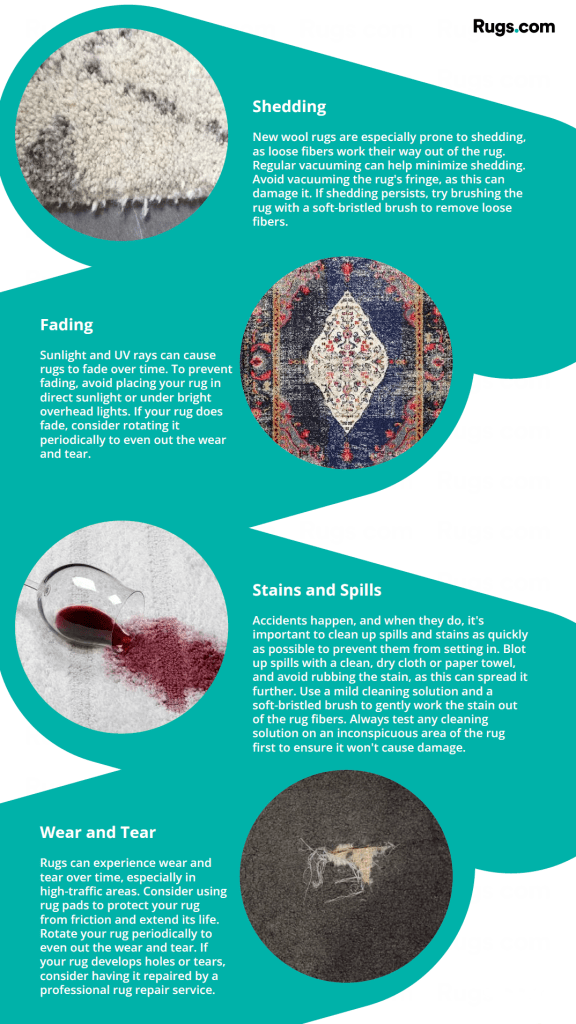
New wool rugs are especially prone to shedding, as loose fibers work their way out of the rug. Regular vacuuming can help minimize shedding. Avoid vacuuming the rug’s fringe, as this can damage it. If shedding persists, try brushing the rug with a soft-bristled brush to remove loose fibers.
Fading
Sunlight and UV rays can cause rugs to fade over time. To prevent fading, avoid placing your rug in direct sunlight or under bright overhead lights. If your rug does fade, consider rotating it periodically to even out the wear and tear.
Stains and Spills
Accidents happen, and when they do, it’s important to clean up spills and stains as quickly as possible to prevent them from setting in. Blot up spills with a clean, dry cloth or paper towel, and avoid rubbing the stain, as this can spread it further. Use a mild cleaning solution and a soft-bristled brush to gently work the stain out of the rug fibers. Always test any cleaning solution on an inconspicuous area of the rug first to ensure it won’t cause damage.
Wear and Tear
Rugs can experience wear and tear over time, especially in high-traffic areas. Consider using rug pads to protect your rug from friction and extend its life. Rotate your rug periodically to even out the wear and tear. If your rug develops holes or tears, consider having it repaired by a professional rug repair service.
Bold Colors and Patterns
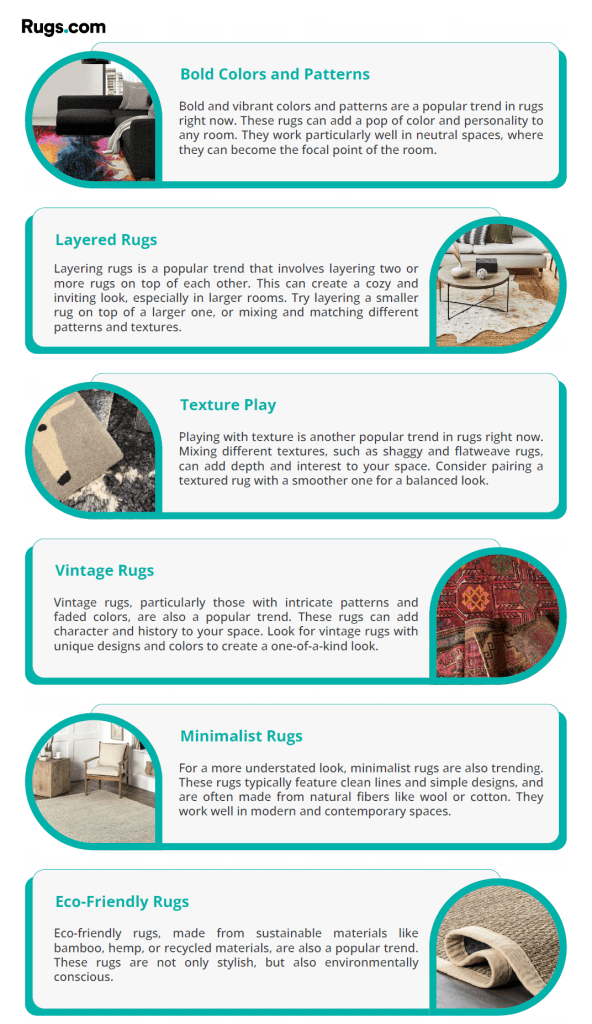
Bold and vibrant colors and patterns are a popular trend in rugs right now. These rugs can add a pop of color and personality to any room. They work particularly well in neutral spaces, where they can become the focal point of the room.
Layered Rugs
Layering rugs is a popular trend that involves layering two or more rugs on top of each other. This can create a cozy and inviting look, especially in larger rooms. Try layering a smaller rug on top of a larger one, or mixing and matching different patterns and textures.
Texture Play
Playing with texture is another popular trend in rugs right now. Mixing different textures, such as shaggy and flatweave rugs, can add depth and interest to your space. Consider pairing a textured rug with a smoother one for a balanced look.
Vintage Rugs
Vintage rugs, particularly those with intricate patterns and faded colors, are also a popular trend. These rugs can add character and history to your space. Look for vintage rugs with unique designs and colors to create a one-of-a-kind look.
Minimalist Rugs
For a more understated look, minimalist rugs are also trending. These rugs typically feature clean lines and simple designs, and are often made from natural fibers like wool or cotton. They work well in modern and contemporary spaces.
Eco-Friendly Rugs
Eco-friendly rugs, made from sustainable materials like bamboo, hemp, or recycled materials, are also a popular trend. These rugs are not only stylish, but also environmentally conscious.
Knot Count
Knot count is a measure of how many knots per square inch are used in a rug. A higher knot count generally indicates a finer, more detailed design, as well as greater durability. It is important to note, however, that knot count is just one factor in determining rug quality and should not be the sole factor used to evaluate a rug.
Material Quality
The quality of materials used in a rug can greatly impact its overall quality and durability. Some commonly used materials for rugs include wool, silk, cotton, and synthetic fibers. High-quality wool, for example, is known for its strength, durability, and ability to hold dyes well. Silk rugs, on the other hand, are known for their luxurious feel and intricate designs.
Dyeing Techniques
The dyeing techniques used in a rug can also impact its quality. Hand-dyed rugs are generally considered to be of higher quality than machine-dyed rugs, as hand-dyeing allows for greater control over the color and saturation of the yarn. Natural dyes, such as those made from plants or insects, are also considered to be of higher quality than synthetic dyes.
Weaving Techniques
The weaving techniques used in a rug can also impact its quality. Hand-woven rugs, for example, are generally considered to be of higher quality than machine-woven rugs, as hand-weaving allows for greater attention to detail and a tighter weave. The way in which the knots are tied, the type of loom used, and the weaving pattern can all impact the overall quality of the rug.
Origin and Provenance
The origin and provenance of a rug can also impact its quality and value. Some regions are known for producing high-quality rugs, such as Persia (now Iran), Turkey, and India. Additionally, the age and history of a rug can impact its value and desirability. A rug with a rich history and provenance may be considered more valuable than a newer rug of similar quality.

Factors Affecting Rug Prices
Several factors can impact the cost of a rug, including the materials used, the knot count, the size, the complexity of the design, and the origin and provenance of the rug. Handmade rugs, for example, are generally more expensive than machine-made rugs due to the amount of time and skill required to create them. Rugs made from high-quality materials such as wool or silk may also be more expensive than those made from synthetic fibers.
Budget-Friendly Rugs
If you’re on a budget, there are still plenty of options for finding a great rug. Look for rugs made from synthetic fibers or lower-quality wool, which will be less expensive than rugs made from high-quality materials. Additionally, consider purchasing a smaller rug or opting for a flatweave rug, which is typically less expensive than a high-pile rug.
High-End Rugs
If you’re willing to invest in a high-end rug, look for rugs made from high-quality materials such as wool or silk, with a high knot count and intricate design. These rugs can be considered works of art and can appreciate in value over time.
Rug Maintenance and Repair
Proper maintenance and repair can help extend the life of your rug. Regularly vacuuming your rug and rotating it every six months can help prevent wear and tear. If your rug does sustain damage, such as a hole or tear, it’s important to have it repaired as soon as possible to prevent the damage from worsening.
Storing Rugs
If you need to store your rug, it’s important to clean it thoroughly first to prevent any dirt or dust from settling in. Roll the rug up tightly and wrap it in acid-free paper or plastic to prevent moisture damage.
Repairing Holes and Tears
If your rug has a hole or tear, it’s important to have it repaired as soon as possible to prevent the damage from spreading. A professional rug repair specialist can match the color and texture of the surrounding area to create a seamless repair.
Fringe Repair and Replacement
Fringes can become damaged over time, but they can also be repaired or replaced. A professional rug repair specialist can match the color and style of the existing fringe to create a seamless repair.
How to Incorporate Rugs into Your Decor
Rugs can be a great way to tie a room together or create a focal point. When choosing a rug, consider the colors and textures in the room and look for a rug that compliments them. Additionally, consider using a rug to create a focal point in the room, such as placing it under a coffee table or at the foot of the bed. Mixing and matching styles, such as pairing a traditional rug with modern furniture, can also create an interesting and unique look.
Rugs as Investments
Some rugs can appreciate in value over time, making them a potentially valuable investment. Understanding rug valuation, including factors such as age, condition, and origin, can help you make an informed decision when purchasing a rug as an investment. Additionally, insuring your rug can protect your investment in case of damage or loss.
What is a Rug Pad?
A rug pad is a cushioned underlay that goes beneath your rug to prevent slipping and provide extra cushioning. Rug pads can also help extend the life of your rug by preventing excessive wear and tear from foot traffic.
How Often Should I Clean My Rug?
The frequency of cleaning your rug depends on the level of foot traffic it receives. For high-traffic areas, it’s recommended to clean your rug once every six months, while for low-traffic areas, once a year may be sufficient. Regular vacuuming can help remove surface dirt and debris, but professional cleaning is necessary to remove deeper dirt and stains.
Can I Use a Rug in a Damp or Humid Environment?
Rugs made from natural materials like wool or cotton may be susceptible to mold or mildew in damp or humid environments. If you live in a humid climate, consider using a rug made from synthetic fibers that are less likely to absorb moisture. Additionally, be sure to air out your rug regularly and use a dehumidifier to control moisture levels.
How Can I Prevent My Rug from Slipping?
A rug pad can help prevent your rug from slipping, but there are also other options, such as using double-sided tape or a non-slip rug spray. Additionally, avoid placing heavy furniture on top of your rug, which can cause it to bunch up and slip.
How Can I Tell if My Rug is Handmade or Machine-Made?
Handmade rugs typically have variations in color and texture, while machine-made rugs tend to have a more uniform appearance. Look closely at the rug’s design and construction to identify any irregularities or variations that may indicate a handmade rug.
How Do I Get Rid of Pet Hair on My Rug?
Regular vacuuming can help remove pet hair from your rug, but there are other methods you can try as well. Using a rubber broom or a lint roller can help lift hair from the surface of the rug. Additionally, brushing your pet regularly can help reduce shedding and the amount of hair on your rug.
 THE RUG REVIEW