

Rugs have been a staple of home decor for centuries, providing both practicality and aesthetic value. But have you ever stopped to consider the wide variety of materials that rugs can be made from?
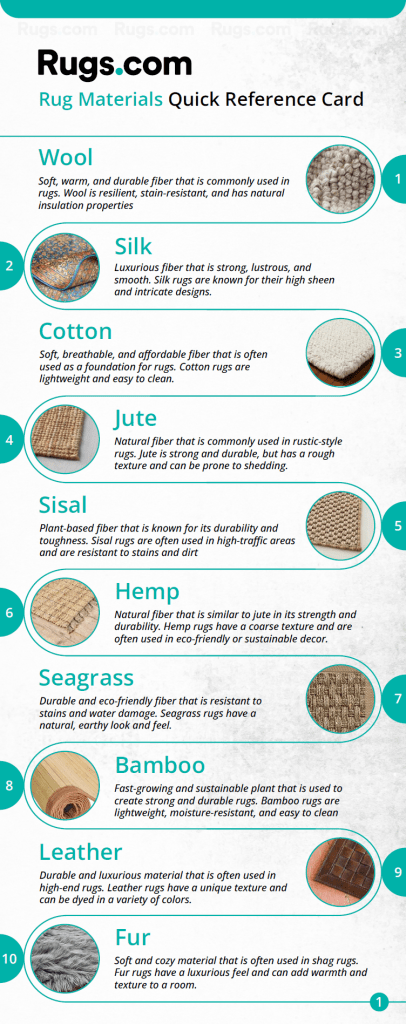
Let’s start with wool, one of the most popular materials for rug-making. Wool is a natural fiber that is harvested from sheep, and it has been used for centuries to create soft, durable rugs. Wool rugs are known for their ability to resist stains and dirt, making them a popular choice for high-traffic areas like living rooms and hallways. The downside of wool is that it can be expensive, and may require special care when it comes to cleaning and maintenance.
Another popular material for rugs is cotton. Cotton is a versatile and affordable fiber that can be woven into a wide range of styles and textures. Cotton rugs are often lightweight and easy to clean, making them a great choice for areas that receive a lot of foot traffic. However, cotton does have a tendency to shrink and lose its shape over time, so it’s important to choose a high-quality cotton rug if you want it to last.
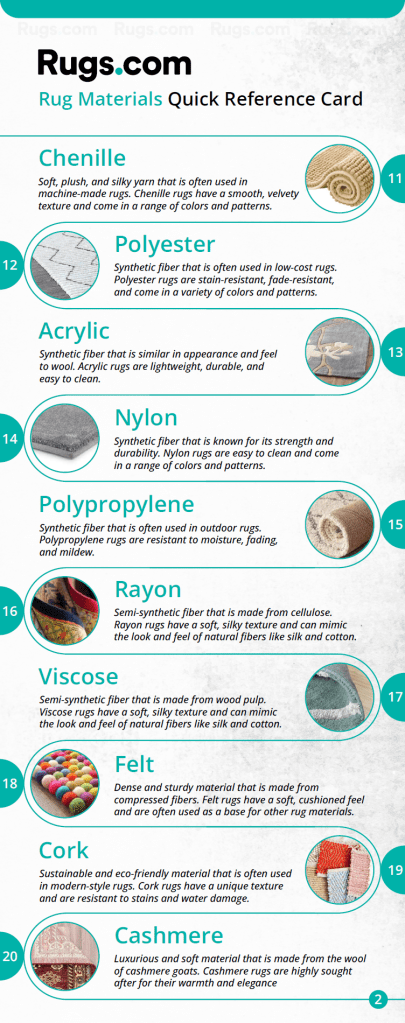
Synthetic materials like nylon and polyester are also popular choices for rug-making. These fibers are durable and stain-resistant, making them ideal for families with kids or pets. Synthetic rugs are often less expensive than natural fiber rugs, and they come in a wide range of styles and colors. However, some people may find that synthetic rugs lack the softness and texture of natural fiber rugs.
Silk is a luxurious and elegant material known for its softness, sheen, and ability for use with intricate designs. However, silk is a delicate material that requires special care, and it can be quite expensive. Silk rugs are not a practical choice for high-traffic areas, but they can add a touch of luxury to a bedroom or formal living room. Silk rugs are often hand-knotted or hand-tufted, which means that each rug is a unique work of art.
Another natural fiber that is sometimes used to make rugs is jute. Jute is a plant fiber that is grown in India and Bangladesh, and it is often used to create rustic, eco-friendly rugs. Jute rugs are durable and affordable, and they have a unique texture that can add warmth and character to a room. However, jute rugs can be difficult to clean, and they may not be as soft as other natural fiber rugs.
Sisal is also a natural fiber used to create rugs and is grown in tropical regions like Africa and Brazil. Sisal rugs are often woven into a flat, herringbone pattern that is both stylish and durable. Sisal is a highly sustainable material that requires little water or fertilizer to grow, making it an eco-friendly choice for environmentally conscious consumers. One of the advantages of natural fiber rugs is their ability to breathe, which makes them ideal for regulating indoor temperature and humidity.
Finally, we come to leather, a material that is sometimes used to create bold, statement-making rugs. Leather rugs are often made from cowhide or sheepskin, and they can add a touch of rustic charm to a living room or bedroom. Leather rugs are durable and easy to clean, but they may also fall in a higher price range.
In addition to the materials used to make rugs, the design and construction of the rug can also impact its durability and appearance. For example, hand-knotted rugs are often more expensive than machine-made rugs, but they are also more durable and can last for generations with proper care. Flatweave rugs, on the other hand, are often less expensive and can be easily rolled up for storage or transport. When choosing a rug for your home, it’s important to consider both the materials used and the design of the rug. Natural fiber rugs like wool and cotton are ideal for regulating indoor temperature and humidity, while synthetic materials like nylon and polyester are often more durable and stain-resistant. Leather and sisal rugs are also worth considering for their unique textures and eco-friendly properties.
There are many different materials that can be used to create rugs, each with its own unique advantages and disadvantages. From natural fibers like wool and cotton to synthetic materials like nylon and polyester, there is a rug out there for every style and budget. Whether you prefer the softness of wool, the affordability of cotton, or the luxury of silk, rest assured there is a rug out there perfect for your home and unique needs.
 THE RUG REVIEW