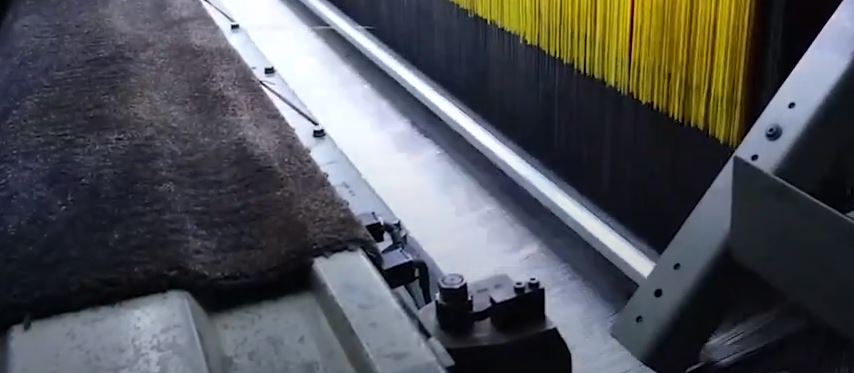
Power looms are mechanized weaving machines used in the production of machine-made rugs and textiles. They revolutionized the textile industry by automating the weaving process, making it faster and more efficient compared to traditional hand weaving.
Let’s dive into more detail about power looms used for machine-made rug production:
- Operation:
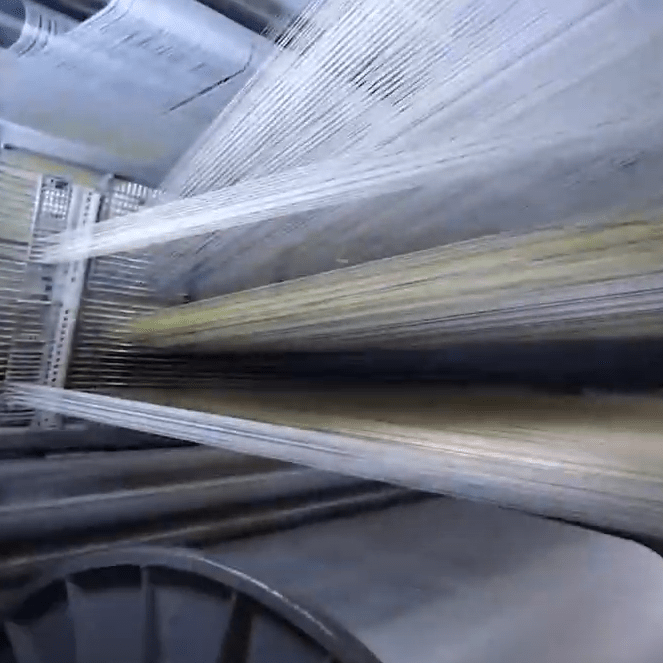
a. Warp and Weft: Power looms consist of two primary sets of threads: warp and weft. The warp threads are held under tension on a warp beam and run vertically on the loom. The weft threads, also known as filling or woof, are interlaced with the warp threads to create the fabric.
b. Shedding: Shedding is the process of creating an opening between the warp threads to allow the weft thread to pass through. Power looms achieve shedding through different mechanisms, depending on the loom type.
- In shuttle looms, the shedding mechanism involves raising and lowering harnesses to create a shed.
- Projectile looms use a rapier or projectile to carry the weft thread across the warp threads.
- Rapier looms utilize a rapier to transfer the weft thread through the shed.
- Air jet and water jet looms use air or water jets to insert the weft thread through the shed.
c. Beating: After each weft thread is inserted, it needs to be pushed tightly against the previous row of threads. This process is known as beating. Power looms use beaters or reed combs to accomplish this, ensuring a compact and well-woven fabric.
d. Take-up and Let-off: As weaving progresses, the woven fabric needs to be advanced while maintaining appropriate tension. The take-up mechanism pulls the fabric away from the weaving area, while the let-off mechanism releases the necessary amount of warp thread from the warp beam.
- Types of Power Looms:
a. Shuttle Looms: Shuttle looms were among the earliest types of power looms. They feature a shuttle that carries the weft thread back and forth across the warp threads. Shuttle looms are efficient but require stopping and changing the shuttle’s position at the end of each row.
b. Projectile Looms: Projectile looms propel a small metal or plastic projectile carrying the weft thread through the shed. These looms are known for their high speed and versatility, as they can handle a wide range of yarns and designs.
c. Rapier Looms: Rapier looms utilize a flexible or rigid rapier, which carries the weft thread across the warp threads. They are suitable for various fabric types and offer improved flexibility compared to shuttle looms.
d. Air Jet Looms: Air jet looms use a jet of compressed air to insert the weft thread through the warp threads. The air jet creates a force that propels the weft thread across the shed. Air jet looms are known for their high weaving speeds and are commonly used in large-scale rug production.
e. Water Jet Looms: Water jet looms employ a jet of water to propel the weft thread across the warp threads. The water jet assists in carrying the weft thread through the shed. Water jet looms are particularly suitable for weaving synthetic fibers but are less commonly used in rug production compared to other types of power looms.
- Advantages and Limitations:
a. Advantages: Machine-made rugs produced on power looms offer several advantages:
- Speed and Efficiency: Power looms significantly increase the speed and efficiency of rug production compared to hand weaving.
- Consistency: Power looms ensure consistent and uniform weaving, resulting in rugs with a standardized appearance.
- Cost-Effectiveness: Machine-made rugs are generally more affordable than handmade rugs due to lower labor costs and higher production volumes.
- Design Versatility: Power looms can accommodate complex designs, intricate patterns, and a wide range of color combinations. Advanced looms with computerized dobby or jacquard mechanisms can produce intricate designs with ease.
b. Limitations: Power looms have some limitations compared to handmade rug production:
- Limited Textural Variation: Machine-made rugs lack the intricate texture and three-dimensional qualities often found in handmade rugs.
- Reduced Artistry: The artistic touch and craftsmanship associated with handmade rugs are absent in machine-made rugs.
- The Complexity of Customization: Customizing designs and patterns on power looms can be more challenging compared to hand weaving, although computerized looms have increased the level of customization possible.
- Quality Variation: The quality of machine-made rugs can vary depending on factors such as the type of loom, materials used, and manufacturing standards.
Despite their limitations, power looms have revolutionized the textile industry, enabling efficient and cost-effective production of machine-made rugs and textiles. They coexist with handmade rug production, catering to different market segments with distinct preferences for craftsmanship and individuality.
 THE RUG REVIEW